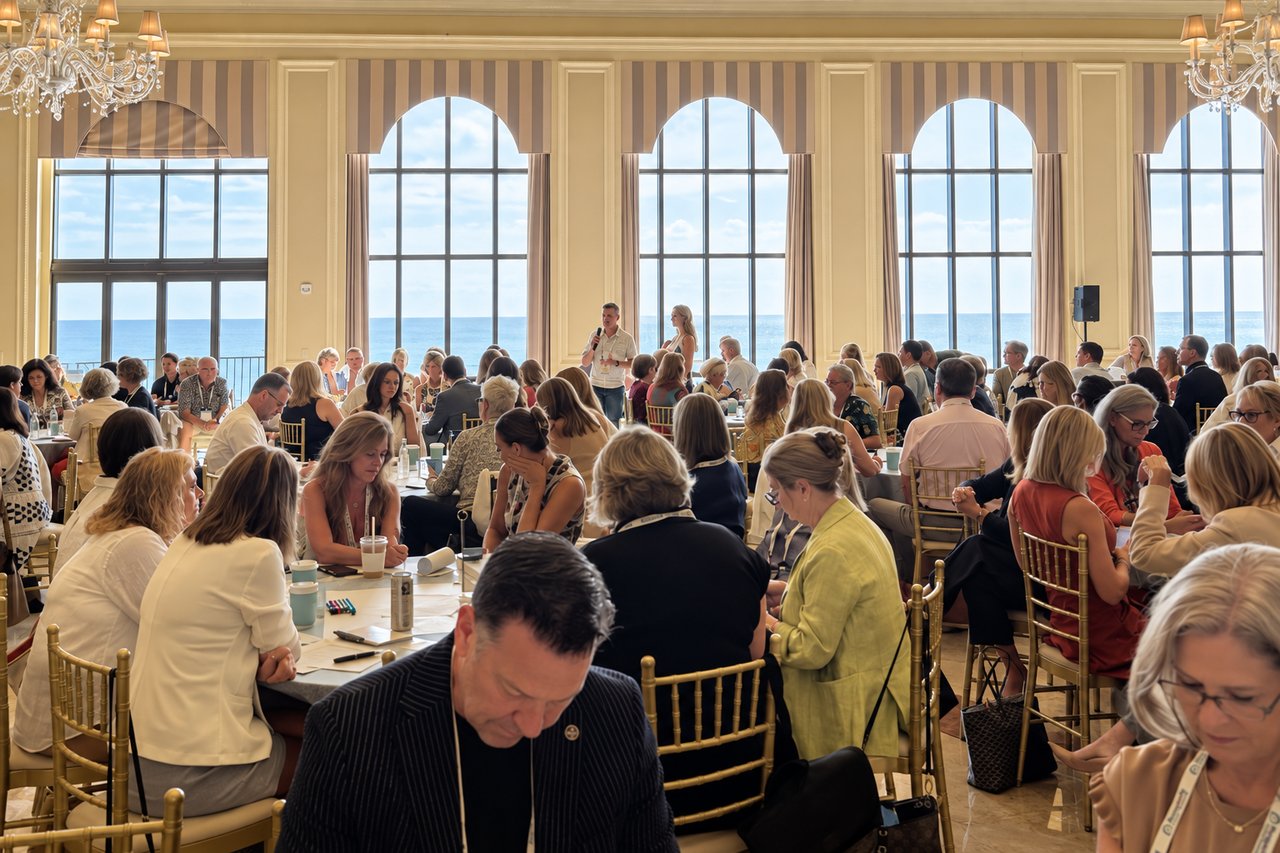
Late on a Monday night in early August, a crowd inside Waltham's City Council chamber erupted in applause. The vote that triggered it had nothing to do with a school budget or a beloved local business. Councilors had just voted 12 to 1 to override Mayor Jeannette McCarthy's veto and clear the way for a zoning change on a stretch of half-empty office buildings off Winter Street known as Bay Colony.
If you're comparing Waltham to Belmont, Watertown, or Arlington right now, you've probably already seen the number that makes Waltham look like the value play: a residential tax rate of $10.32 per $1,000 of assessed value for fiscal year 2026, according to the city's Assessor's Department. That's a real number and it's genuinely lower than what a lot of neighboring towns charge. What it doesn't tell you is where that discount comes from, or that the mechanism generating it just spent a summer in open political combat at City Hall.
The Rate Everyone Quotes, and the Question It Doesn't Answer
A $10.32 rate sounds like fiscal discipline. It's closer to a subsidy, and the subsidy has a specific address: the office parks lining Route 128 on the west side of the city.
Waltham runs a split tax rate, meaning commercial and industrial property pays a different, higher number than homeowners do. For fiscal 2026, the City Council set that split so the commercial tax base covers approximately 45.9 percent of Waltham's total tax levy, according to reporting from the Waltham Times on the Board of Assessors' presentation to the council. The Boston Globe put it more bluntly: nearly half of Waltham's property tax base comes from commercial real estate, a higher share than anywhere else in Massachusetts except Cambridge and Boston.
That's not a coincidence of geography. It's the accumulated result of decades of biotech and life-science companies filling lab and office space along Route 128. AstraZeneca and Boston Dynamics both maintain substantial operations in the corridor, and Boston Dynamics announced a $100 million expansion there earlier this year. Every square foot those companies lease gets taxed at the commercial rate, and every dollar of that levy is a dollar a homeowner doesn't have to pay.
Where the Subsidy Is Cracking
Here's the part that changes the calculation for anyone pricing Waltham against its neighbors on a five-to-ten-year horizon: the subsidy is shrinking, and it's shrinking for structural reasons that predate this year's council fight.
Office vacancy along Route 128 has been climbing since the pandemic normalized remote and hybrid work. A midyear 2026 report from commercial brokerage Avison Young put vacancy in the roughly 152 million-square-foot Route 128 office market at 20.3 percent, with an availability rate closer to 24 percent. A separate analysis found suburban vacancy across the combined Route 128 and 495 corridors running around 26 percent. Nationally, office-backed commercial mortgages hit a delinquency rate of 12.34 percent in January 2026, according to industry data reported by Tech Times, a record that surpassed the worst point of the 2008 financial crisis.
Empty buildings don't just sit quietly. Their owners ask for tax abatements, and abatements mean less revenue flowing into the same city budget. This year, Waltham responded by raising its residential tax rate 5 percent, which the Waltham Times reported was the sharpest single-year increase, adjusted for inflation, since 2010. The Globe's framing was direct: the city raised the residential rate to make up for lost commercial revenue. Councilor Cathyann Harris said as much to her colleagues in blunter terms, according to Banker & Tradesman: residential taxpayers, herself included, saw an increase because commercial taxpayers could no longer carry their share.
That's the mechanism a median-price comparison never shows you. Waltham's tax advantage over Belmont or Watertown isn't a fixed civic trait. It's tied to how full a specific set of 1970s and 1980s-era office buildings stay, and right now they're not staying full.
The City's Fix, and the Math Nobody Fully Agrees On
The council's answer was to rezone three underused commercial sites for housing. Here's what's actually on the table, based on the zoning framework the council approved in June and revisited over the summer.
| Site | Owner | Acreage | Proposed units |
|---|---|---|---|
| Bay Colony (Winter Street) | BXP | 135 acres | Up to 1,200 |
| Jones Road | BXP | 20 acres | 300 to 400 |
| Former Polaroid campus (1265 Main St.) | J & CO LLC | Not specified | Up to 600 |
Mayor McCarthy approved the Jones Road and Polaroid rezonings without objection. Bay Colony was different. On July 1, she vetoed just that piece, citing concerns that the reduced parking minimums set what she called a dangerous precedent for the city and questioning why a site with no direct access to bus or rail service should receive the same zoning benefits as the more transit-accessible parcels. The council disagreed, and on August 3 it overrode her veto by a vote of 12 to 1. The lone dissent came from Council Vice President Randall LeBlanc, who said he wasn't against the housing itself but wanted more time spent addressing the mayor's concerns.
"We have significant office vacancies, acres of parking lots built for employees who are no longer coming into these buildings every day," Councilor Harris told her colleagues before the vote. "Decline has its consequences."
The round number you'll see repeated most often is 2,100 new homes across the three sites. It's a reasonable shorthand, but it flattens a more complicated set of figures worth knowing if you're trying to understand how much housing could actually show up in this corridor. BXP and J & CO LLC contractually agreed to cap development at 2,000 units combined. A separate zoning capacity review conducted by consulting firm CommunityScale LLC estimated the three districts could theoretically accommodate up to 5,990 residential units and more than 14 million square feet of commercial space at full buildout, a ceiling nobody expects to be built but one that shapes how the city and neighboring Lincoln are thinking about worst-case traffic and infrastructure planning. A traffic study submitted for the Winter Street parcels put the more immediate number closer to 1,103 units. None of these figures are wrong. They're measuring different things: a contractual cap, a theoretical zoning maximum, and a near-term engineering estimate.
Part of what made the override politically viable was money attached to roads. The developers and the state agreed to fund a new connector between two heavily trafficked roads, a project expected to cost roughly $30 million, split with the state committing $15 million and BXP committing up to $15 million, according to contract details reported in a Globe editorial. Waltham officials had been trying to fund that connector for 15 years without success. Losing the state and developer money if the veto stood was, by multiple accounts from councilors, part of what tipped the vote.
What This Means If You're Weighing Waltham Against Its Neighbors Right Now
This isn't finished business, and that's the point for anyone treating today's tax rate as a stable input. As of September 2026, the town of Lincoln, which borders Bay Colony directly, is drafting a formal letter to McCarthy and the council raising concerns about the roughly 4,500 additional daily vehicle trips the developer's traffic study projected, with worry that traffic will spill onto Old County Road and Trapelo Road as drivers try to avoid Winter Street congestion. Lincoln has hired its own traffic engineering firm to review the numbers. Buildout on sites this size typically stretches a decade, and every stage from special permits to construction financing gives neighboring towns, city officials, and the developers themselves more opportunities to renegotiate scope, timing, and cost.
For a buyer comparing carrying costs across Waltham, Belmont, Watertown, and Arlington, the practical takeaway isn't that Waltham's tax rate is about to spike. It's that the rate you're comparing today reflects a commercial subsidy in the middle of a correction, not a settled fact. If office vacancy along Route 128 stays elevated, expect more years like this one, with residential rates absorbing more of the gap. If the rezoned sites fill with the thousands of new households the zoning eventually allows, that adds new residential tax revenue to the base, but it also adds new residential demand for schools, roads, and services that the current rate structure wasn't built around. Either direction changes the math differently than a flat comparison of this year's rate against Watertown's or Belmont's would suggest.
A Few Questions Worth Asking Before You Compare Rates
Does this affect my tax bill if I buy in Waltham today? Not immediately. The FY2026 rate of $10.32 per $1,000 is set for this fiscal year regardless of how the Bay Colony development proceeds. The relevant question is what happens to next year's rate and the years after, as office vacancy and new housing supply both play out.
When would any of these 2,000-plus units actually be available to buy or rent? The zoning override clears a legal path, but developers still need special permits from the City Council for each phase, and city officials have said buildout could stretch over a decade. Nothing here is close to move-in ready.
Does this only matter if I'm looking at homes near Route 128? The zoning itself is site-specific, but the tax mechanism isn't. A shrinking commercial base affects the citywide residential rate, which shows up on every Waltham tax bill regardless of which neighborhood the home sits in.
If you're trying to figure out how Waltham's numbers actually compare to Belmont, Watertown, or Arlington once you account for where the tax base is headed, that's exactly the kind of question worth a real conversation instead of a spreadsheet. The Toland Team has spent years watching how these inner-ring suburbs move relative to each other, and we're glad to walk through what a specific property and town mean for your budget. Get a free home valuation and let's talk through the numbers that actually apply to your situation.