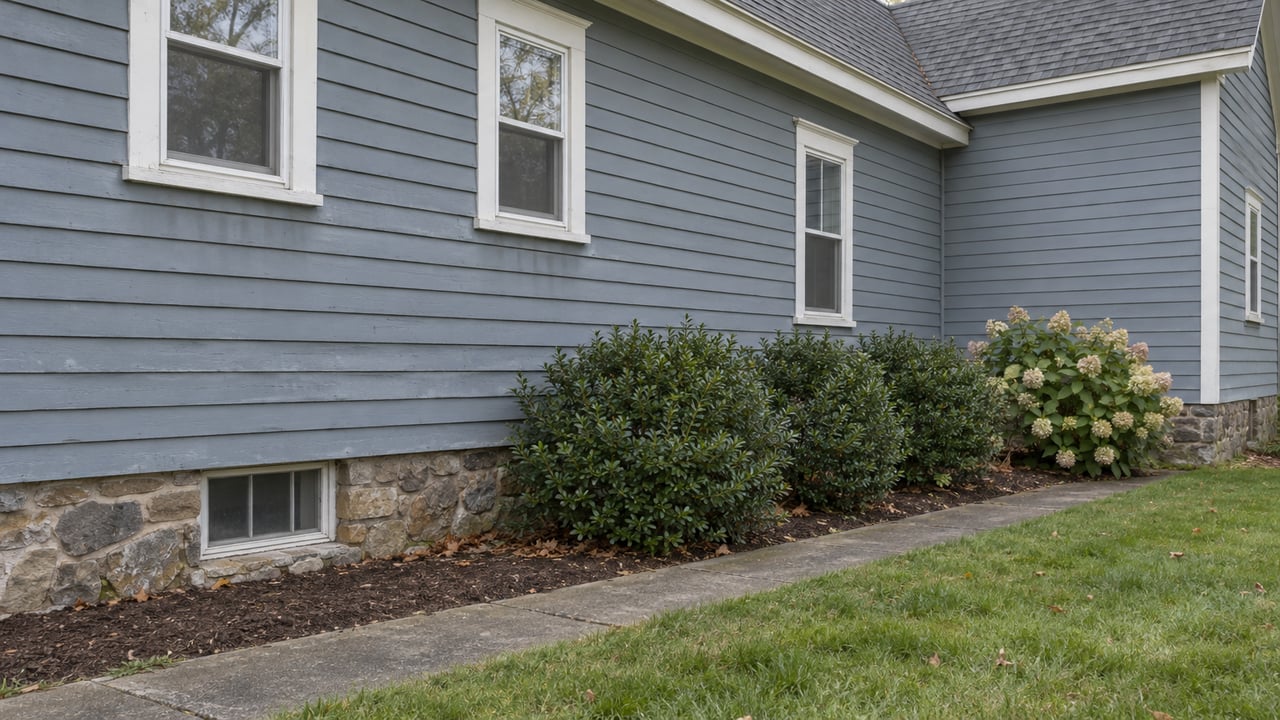
A home inspector working a routine walkthrough on a 1930s colonial off Pleasant Street pauses at the basement wall, flashlight aimed at two capped pipes jutting from the concrete a few inches above the floor. Old fill line. Old vent line. No tank in sight, but the pipes only lead one place: down, and out, toward a spot in the side yard where the grass has never quite matched the rest of the lawn. The seller didn't mention a tank because the seller genuinely didn't know one was there. The house came with a furnace conversion decades before they bought it, and whatever paperwork existed went into a drawer that got cleaned out three owners ago.
This exact scene plays out across Belmont more often than most sellers expect, and the reason has nothing to do with bad luck. It has to do with when these houses were built.
Belmont's Housing Age Is the Real Story Here
Belmont's housing stock skews old even by the standards of a region full of old housing. According to a housing needs assessment compiled for the town using Census and Metropolitan Area Planning Council data, roughly 62 percent of Belmont's housing units were built before 1939, with another 21 percent built between 1940 and 1959. Construction since 2000 accounts for just 2.2 percent of units, compared to 9 percent statewide.
That matters here for a specific, practical reason. Homes built before 1960 are the prime candidates for underground oil tanks, the kind installed when oil delivery was the default heating fuel and nobody thought twice about burying a steel tank four to ten feet from the foundation, sometimes under what's now a driveway or a patio. A house built in Belmont in 1928 or 1947 was almost certainly heated with oil at some point in its life, and if that system was ever upgraded or converted without a documented tank removal, there's a real chance the old tank is still down there.
This is not a defect specific to one street or one price bracket. It shows up in modest capes near Waverley Square and in the larger colonials on Belmont Hill alike, because the age of construction, not the size of the house, is what determines whether this conversation happens.
What Massachusetts Law Actually Requires You to Disclose
Here's where a lot of sellers relax too early. LegalClarity's guide to Massachusetts residential oil-tank rules says Massachusetts does not have a statute that requires an oil tank test as a condition of sale. The state is generally a "buyer beware" jurisdiction, and sellers aren't obligated to go hunting for problems they don't already know about.
But the practical picture is more complicated. Lenders and insurers routinely refuse to move forward on a property with a suspected or confirmed underground tank until it's addressed, statute or no statute. A missing legal mandate doesn't mean a missing practical one.
Belmont's housing age adds a second disclosure layer that stacks directly on top of the tank question. According to Nolo's guide to Massachusetts home sellers, any home built before 1978, which describes the overwhelming majority of the town's housing stock, triggers a federal and state requirement to provide buyers with a lead paint notification before the purchase and sale agreement is signed. Sellers of these older Belmont homes are frequently having the tank conversation and the lead paint conversation in the same week, sometimes in the same phone call with their agent.
Then there's the liability question that makes proactive testing worth the money. Under Massachusetts General Laws Chapter 21E, responsibility for contamination cleanup can attach to whoever owned the property when a release occurred, which means an unresolved tank isn't just a closing headache. It's an open liability question that follows the property, and sometimes the person who owned it, well past the sale.
The costs involved explain why buyers push so hard on this even without a legal mandate:
| Scenario | Typical cost |
|---|---|
| Above-ground tank removal, part of a heating conversion | $300 to $800 |
| Underground tank removal, no contamination found | $1,500 to $5,000 or more |
| Underground tank removal with soil contamination | $10,000 to $50,000 or more |
The spread between the second and third row is the entire reason lenders won't wait for someone to find out the hard way. A clean underground tank removal is an annoyance. A contaminated one is a project.
The Rebate That Changes the Math, But Only for One Side of the Table
Here's the part of this story that doesn't show up in generic disclosure guides, because it's specific to Belmont.
Belmont runs its own municipal electric utility, Belmont Light, and it is currently offering one of the more generous heat pump incentives in the region. For systems installed from January 1, 2026 onward, the rebate runs $1,000 per ton of cooling capacity, with a maximum rebate of $5,000 per household, plus an additional $500 adder if the project includes qualifying weatherization work. To collect the higher tier tied to a full conversion, homeowners have to submit before-and-after photos proving the old fossil fuel system, oil or gas, was actually removed: the capped gas line, the capped exhaust line, the empty spot where the boiler used to sit.
That documentation requirement is the detail worth sitting with. Belmont Light's own program rules exclude equipment that came with a home purchase from rebate eligibility. In other words, if a buyer closes on a house that already has a heat pump installed, they can't file for the rebate themselves. The subsidy only reaches the party who does the conversion work before the property changes hands.
That's a rebate structure that, whether intentionally or not, points squarely at sellers of Belmont's oldest housing stock. The same homes most likely to have a legacy oil tank sitting in the yard are the same homes where converting to a heat pump and documenting the old system's removal can be worth up to $5,000 back from the utility, plus an additional $500 adder for qualifying weatherization, and that money only flows to whoever does it first. Wait until after closing, and the buyer inherits the system but not the rebate.
According to MassHVAC's Massachusetts HVAC rebates guide, Belmont Light customers don't have access to the state's Mass Save program, since municipal light customers are served through their own utility programs rather than the investor-owned utilities that fund Mass Save. What they do have access to is a separate zero-interest financing option, a state-backed loan of up to $25,000 for qualifying efficiency upgrades, available through the local utility rather than the state program. For a seller weighing whether to fund a conversion before listing, that financing option changes what "before I sell" actually costs out of pocket.
What This Means If You're Listing an Older Belmont Home
If you own a pre-1960 Belmont home and you're thinking about listing in the next year, the sequence matters more than the individual steps. A tank sweep or soil test before you list costs far less than discovering the issue mid-transaction, when a buyer's lender pauses the loan and everyone is suddenly negotiating on a deadline instead of on the merits. If a tank turns up and the home is still on oil heat, this is the moment to run the actual numbers on conversion, not just the removal cost, but the removal cost minus a rebate that specifically rewards doing the work before the sale rather than after.
Sellers who complete a documented fossil fuel system removal ahead of listing walk into showings with one less open question hanging over the property. Buyers who are already comparing several older Belmont homes will notice which ones come with a resolved heating system and which ones come with a promise to "look into it."
What This Means If You're Buying
If you're under agreement on a Belmont home built before 1960, ask directly whether the current system was ever converted from oil, and if so, whether the tank was removed and documented. A capped pipe in the basement or a fill cap in the yard is worth a professional sweep before you waive an inspection contingency, given how the cost curve on this specific issue jumps once contamination enters the picture.
If the home already has a heat pump installed, don't count on claiming the Belmont Light rebate yourself. That opportunity belongs to whoever did the work, and it isn't transferable at closing.
A Few Questions Worth Asking Before You List or Offer
Does Massachusetts require a seller to test for an underground oil tank before selling? No. There's no statute mandating a test, but lenders and buyers routinely request one anyway, and a lender can hold up financing until the question is resolved.
If a Belmont home already has a heat pump, can the buyer claim the Belmont Light rebate after closing? No. Belmont Light's program excludes equipment that came with a home purchase, so the rebate only reaches whoever installed the system and documented the old one's removal before the sale.
What happens if soil contamination is found after a tank comes out? Costs escalate quickly, sometimes into five figures, and liability for cleanup can attach to whoever owned the property when the release occurred under Massachusetts General Laws Chapter 21E, which is exactly why proactive testing before listing tends to cost far less than finding out during a transaction.
Older homes are most of what Belmont has to offer, and that's not a problem to solve so much as a fact to plan around. If you're weighing whether to test, convert, or simply understand what your specific property is carrying before you list or make an offer, The Toland Team has walked enough of these pre-1960 Belmont sales to know which questions to ask first.
This article is general information, not legal, tax or financial advice. Consult a qualified professional about your situation.